Danielle was sitting in her car outside the grocery store, keys still in the ignition, hands gripping the steering wheel. Nothing dramatic had happened. No accident. No argument. No obvious trigger. She had simply pulled into the parking lot and suddenly felt like she could not go inside. Her heart was racing. Her stomach was tight. Her throat felt weird. Her brain started scanning for danger, even though the biggest threat in front of her was deciding whether she had enough patience for self-checkout.
She told herself, ‘This is ridiculous. I’m fine.’
But her body had a different opinion.
This is a common scenario in midlife that makes so many women feel like they are losing it. Your logical brain may know you are safe, but your nervous system may still be sounding ALL the alarms. And when that happens during perimenopause or menopause, it can feel like anxiety moved into your body, unpacked its bags, and changed the locks.
Last week, in Why Am I So Anxious? The Perimenopause Connection Most Women Miss, I wrote about how midlife anxiety is often not just a mindset issue. It can be a hormone issue, a gut issue, a sleep issue, a blood sugar issue, a trauma issue, and a nervous system issue. This week, we are taking a closer look at one of the biggest players in that nervous system story: the vagus nerve.
Quick answer: What is the vagus nerve?
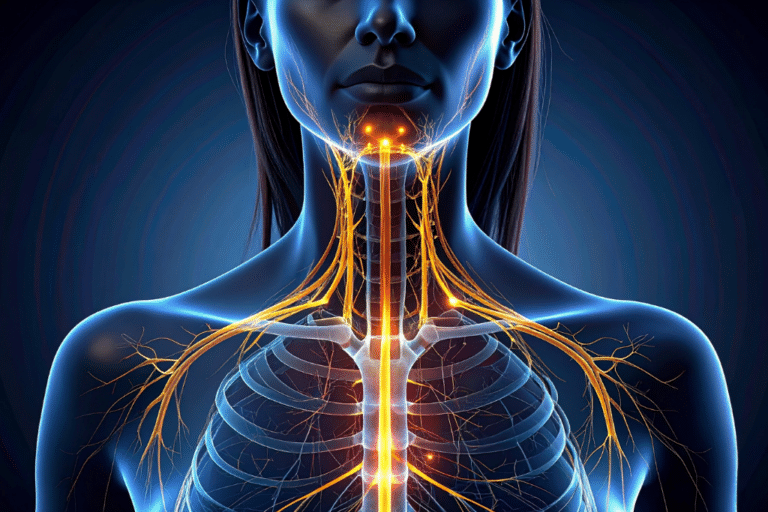
The vagus nerve is the longest cranial nerve in the body. It starts in the brainstem and travels through the neck, chest, and abdomen. It helps your brain communicate with your heart, lungs, digestive tract, immune system, and other organs. Think of it as a two-way information highway between your brain and body.
The vagus nerve is a major part of the parasympathetic nervous system, often called the ‘rest and digest’ side of the nervous system. It helps your body recover, repair, digest, connect, and return to baseline after stress.
What does the vagus nerve control?
The vagus nerve helps regulate functions you do not have to consciously manage. Thank goodness, because we already have enough open tabs in our brains. I do, anyway.
It helps influence:
- Heart rate and heart rhythm
- Breathing patterns
- Digestion and gut motility
- Stomach acid and digestive secretions
- Swallowing and voice muscles
- Inflammation and immune signaling
- Blood pressure shifts
- Mood and emotional regulation
- Stress recovery
- Communication between the gut and brain
This is why vagus nerve dysfunction or low vagal tone can show up in sneaky ways. Some women feel more anxious. Some feel wired and tired. Some have bloating, constipation, reflux, nausea, or a stomach that shuts down under stress. Some notice palpitations. Some feel like they are either revved up or completely collapsed, with not much middle ground.
Fight, flight, freeze, and fawn: why your body gets stuck
Your nervous system is built to protect you. When it senses danger, it can move into survival responses:
- Fight: irritation, anger, defensiveness, jaw clenching, feeling ready to snap
- Flight: restlessness, racing thoughts, overworking, over-planning, wanting to escape
- Freeze: shutdown, numbness, brain fog, procrastination, feeling unable to move forward
- Fawn: people-pleasing, over-apologizing, ignoring your own needs to keep peace
Modern life gives your body plenty of reasons to stay on alert: poor sleep, too much caffeine, blood sugar swings, trauma history, inflammatory foods, gut imbalance, work pressure, caregiving, alcohol, overexercise, under-eating, and the hormonal roller coaster of perimenopause.
Your body does not care that the threat is your inbox instead of a predator. If the signal feels unsafe, the alarm goes off.
Can you really “calm” the vagus nerve?
Yes, but let’s be clear about the language. You do not ‘reset’ your vagus nerve like rebooting a laptop. I wish. You train your nervous system over time so it can shift out of stress mode more easily.
This is called improving vagal tone. Higher vagal tone generally means your body can respond to stress and then recover more efficiently. Lower vagal tone may mean the stress response stays louder and longer than it needs to.
The goal isn’t to never feel stress. That is not realistic, and frankly, it sounds boring. We need some stress in our lives! The goal is flexibility. You want a nervous system that can rise to meet a challenge and then come back to a lower steady state.
Vagus nerve exercises that can help when you feel activated
Start small. Your nervous system does not need another extreme wellness assignment. It needs consistency and safety.
Try these:
- Longer-exhale breathing: Inhale through your nose for 4 counts. Exhale slowly for 6 to 8 counts. Repeat for 3 to 5 minutes.
- Humming or singing: The vagus nerve connects with the throat and vocal cords. Humming in the car absolutely counts.
- Gargling: Gargle water for 30 to 60 seconds. Weird? A little. Useful? Often, yes.
- Gentle cold exposure: Splash cool water on your face or hold a cool cloth to your cheeks. You do not need to become an ice-bath influencer.
- Slow walking outside: Pair gentle movement with light, fresh air, and long exhales.
- Legs up the wall: This can help the body shift toward a calmer state.
- Orienting: Slowly look around the room and name what you see. This tells your brain, ‘I am here, and I am safe now.’
- Connection: A steady voice, a safe person, laughter, prayer, or meaningful conversation can regulate the nervous system beautifully.
When you are in fight or flight, use body-first tools. This is not the time for your brain to run the show and rationalize what you’re feeling. Your body is asking for support and needs a safety signal before your brain can process whatever is going on.
What if you are stuck in freeze or fawn?
Freeze and fawn often need gentler support than fight or flight. If you are shut down, numb, or people-pleasing your way into exhaustion, intense breathwork or cold plunging may be too much.
Better starting points may include:
- Feeling your feet on the floor
- Slow stretching
- Sipping a warm drink
- Naming one thing you need
- Taking one small action, not twelve
- Spending time with someone who feels safe
- Saying, ‘Let me think about that and get back to you’ instead of an automatic yes
A regulated nervous system is not just calm. It is also able to choose.

Want to create a custom longevity health plan?
You’re in the right place.
I can help you with a functional approach to midlife women’s health including hormone balance, gut health, autoimmune issues, bone health, heart health and more!
How gut health factors into the vagus nerve
Here is where this gets very ‘connect the dots,’ which you know is my favorite place to be.
The vagus nerve is one of the main communication routes in the gut-brain axis. Your gut sends signals to your brain through nerves, immune messengers, hormones, and microbial metabolites. Your brain also sends signals back to your gut. This is why stress can cause diarrhea, constipation, reflux, nausea, or that lovely ‘my stomach just dropped’ feeling. Fun times.
Gut microbes produce compounds called short-chain fatty acids when they ferment fiber. These compounds help support the gut barrier, immune balance, and gut-brain communication. A more resilient gut usually sends calmer signals. An inflamed, irritated, imbalanced gut can send distress signals.
Gut problems that may keep the nervous system activated include:
- Constipation
- Bloating
- Reflux
- Food sensitivities
- Low microbial diversity
- Gut inflammation
- Blood sugar swings
- Too little fiber
- Too much ultra-processed food
- Alcohol sensitivity
- Poor sleep, which changes the microbiome too
This does not mean every anxious woman has a gut problem. It means gut health is one upstream system worth checking, especially if anxiety travels with bloating, constipation, reflux, loose stools, skin flares, histamine symptoms, or food reactions.
How hormone shifts affect the vagus nerve and stress response
Perimenopause is not just a reproductive transition. It is also a nervous system transition.
Estrogen and progesterone influence neurotransmitters, sleep, temperature regulation, inflammation, and the stress response. When these hormones fluctuate, your nervous system may become more reactive. That can show up as:
- New or worse anxiety
- Palpitations
- 3 AM wake-ups
- Hot flashes or night sweats
- Irritability or rage
- Lower stress tolerance
- Brain fog
- Digestive changes
- Feeling overstimulated by noise, people, or responsibilities
Progesterone is especially important because it supports GABA activity, one of the brain’s calming pathways. When progesterone drops or fluctuates, you may feel like your body has lost its brake pedal.
Estrogen also matters. It affects serotonin, dopamine, the HPA axis, blood vessels, temperature regulation, and autonomic function. When estrogen is erratic, the body may become more sensitive to stress.
This is why a woman can be fine for decades and then suddenly feel like everyday life became too loud. She did not become weak. Her biology changed.
What actually helps calm the system?
You usually need more than one tool. This is not about throwing random supplements at a nervous system that is begging for basics.
A functional plan may include:
- Stabilizing blood sugar with protein-forward meals
- Eating enough fiber to feed beneficial gut bacteria
- Addressing constipation, reflux, bloating, or dysbiosis
- Reducing alcohol if it worsens sleep, anxiety, or hot flashes
- Building consistent sleep and morning light habits
- Using slow breathing daily, not only when panic hits
- Strength training without overtraining
- Reviewing thyroid, iron, B12, vitamin D, glucose, insulin, lipids, and inflammatory markers
- Evaluating hormone patterns when symptoms suggest perimenopause or menopause
- Considering hormone therapy when appropriate and medically safe
- Getting trauma-informed support when the nervous system has been shaped by old survival patterns
And yes, essential oils, meditation apps, baths, magnesium, and calming teas can be lovely. But they are supporting actors. They are not the stars of the show.
When to get help
Don’t ignore symptoms like chest pain, fainting, severe palpitations, unexplained weight loss, trouble swallowing, persistent vomiting, severe depression, or thoughts of self-harm. Those deserve medical evaluation.
Also, if anxiety is limiting your life, keeping you from driving, working, sleeping, eating, or leaving the house, that deserves support. You do not get extra points for suffering quietly.
Anxiety is information. Fight, flight, freeze, and fawn are information. Gut symptoms are information. Hormone shifts are information. The work is learning how to read the signals instead of shaming yourself for having them.
The bottom line
The vagus nerve is not a magic button, but it is a major part of the anxiety, gut, hormone, and stress story.
If your brain says, ‘We’re fine,’ but your body says, ‘Absolutely not,’ your nervous system may need support. Start with simple body-based practices. Then look upstream at sleep, gut health, blood sugar, hormones, inflammation, and life stress.
You are not crazy. You are not broekn. And you are not doomed to spend your life in emergency mode.
If you want help connecting the dots between anxiety, hormones, gut health, and your stress response, book a Clarity Call with me. We’ll talk about what is going on, what you have already tried, and whether working together is the right next step.
FAQ
What is the vagus nerve in simple terms?
The vagus nerve is a major nerve that helps your brain communicate with your heart, lungs, gut, immune system, and stress response. It helps your body shift toward rest, digestion, repair, and recovery.
What are the best vagus nerve exercises for anxiety?
Longer-exhale breathing, humming, singing, gentle cold exposure, gargling, slow walking, orienting, and safe social connection are good starting points.
Can the vagus nerve cause anxiety?
The vagus nerve does not usually ‘cause’ anxiety by itself. But low vagal tone, chronic stress, gut inflammation, hormone shifts, sleep loss, trauma, and blood sugar swings can make the body feel less safe and more reactive.
How does gut health affect the vagus nerve?
The gut and brain communicate through the vagus nerve, immune messengers, hormones, and microbial metabolites. Gut inflammation, constipation, dysbiosis, and poor diet can send stress signals through this system.
Why does anxiety get worse in perimenopause?
Estrogen and progesterone influence neurotransmitters, sleep, cortisol patterns, temperature regulation, and autonomic function. When these hormones fluctuate, some women feel more anxious, wired, reactive, or overstimulated.
References
Baylor Scott & White Health. (2026, June 5). Need a vagus nerve reset? 7 vagus nerve exercises that actually work. https://www.bswhealth.com/blog/need-a-vagus-nerve-reset-vagus-nerve-exercises
Breit, S., Kupferberg, A., Rogler, G., & Hasler, G. (2018). Vagus nerve as modulator of the brain-gut axis in psychiatric and inflammatory disorders. Frontiers in Psychiatry, 9, 44. https://doi.org/10.3389/fpsyt.2018.00044
Cleveland Clinic. (2022, January 11). Vagus nerve: What it is, function, location & conditions. https://my.clevelandclinic.org/health/body/22279-vagus-nerve
Garrett, A. (2026, June 9). Why am I so anxious? The perimenopause connection most women miss. Dr. Anna Garrett. https://drannagarrett.com/why-am-i-so-anxious/
Garrett, A. (2023, November 9). Understanding perimenopause, stress hormones and the HPA axis. Dr. Anna Garrett. https://drannagarrett.com/understanding-perimenopause-stress-hormones-and-the-hpa-axis/
Laborde, S., Allen, M. S., Borges, U., Dosseville, F., Hosang, T. J., Iskra, M., Mosley, E., Salvotti, C., Spolverato, L., Zammit, N., & Javelle, F. (2022). Effects of voluntary slow breathing on heart rate and heart rate variability: A systematic review and a meta-analysis. Neuroscience & Biobehavioral Reviews, 138, 104711. https://doi.org/10.1016/j.neubiorev.2022.104711
Loh, J. S., Mak, W. Q., Tan, L. K. S., Ng, C. X., Chan, H. H., Yeow, S. H., Chong, K. K. L., Khoo, C. M., & Tan, E. K. (2024). Microbiota-gut-brain axis and its therapeutic applications in neurodegenerative diseases. Signal Transduction and Targeted Therapy, 9, 37. https://doi.org/10.1038/s41392-024-01743-1
SpaSeekers. (2026). The Spa Trends Report 2026. https://www.spaseekers.com/spa-insider/inspiration/the-spa-trends-report-2026/
Dr. Anna Garrett is a menopause expert and Doctor of Pharmacy. She helps women who are struggling with symptoms of perimenopause and menopause find natural hormone balancing solutions so they can rock their mojo through midlife and beyond. Dr. Anna is the author of Perimenopause: The Savvy Sister’s Guide to Hormone Harmony. Order your copy at www.perimenopausebook.com.
Dr. Anna is available for 1-1 consultations. Find out more at www.drannagarrett.com/lets-