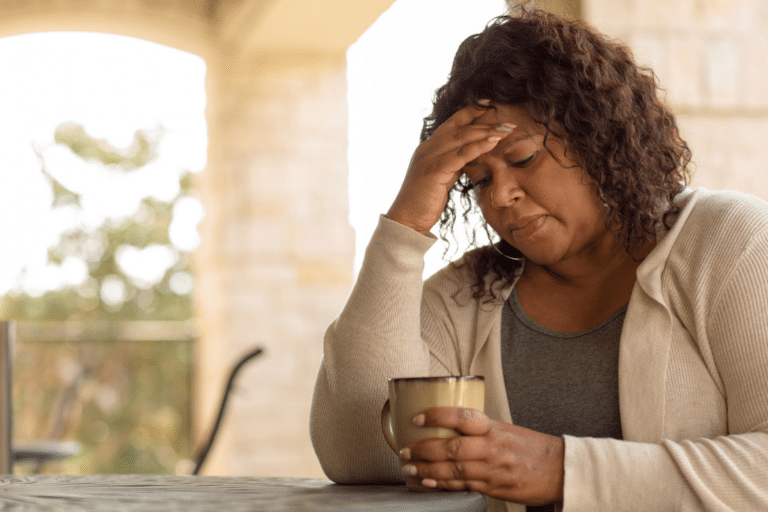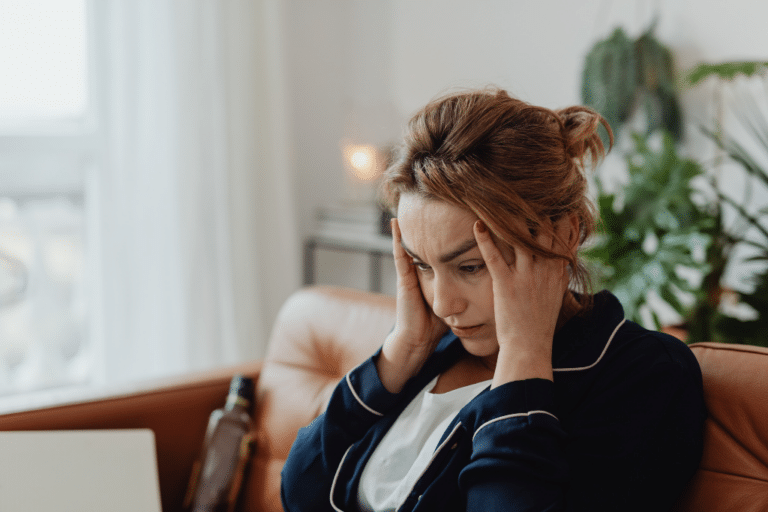
Why am I suddenly so anxious in perimenopause?
One of the most heartbreaking conversations I have with women goes something like this:
“I don’t even recognize myself anymore.”
She’s successful.
She’s competent.
She’s spent decades juggling careers, businesses, children, aging parents, relationships, finances, and the countless responsibilities that come with being a woman in midlife.
Then one day, something shifts.
She starts rereading emails three times before hitting send.
A simple change in her calendar feels overwhelming.
She lies awake at 3 AM, convinced she’s forgotten something important.
Her heart races for no obvious reason. She thinks she’s dying.
She feels on edge all the time.
The smallest inconvenience can bring her to tears.
And perhaps most confusing of all, she can’t explain why.
Looking back, anxiety was one of my earliest clues that something was changing hormonally.
At the time, I didn’t connect the dots.
Like many women, I assumed I was stressed.
After all, I was running a business, raising a family, worrying about my mom, who was ill with cancer, managing responsibilities, and trying to do all the things women tend to do.
What I know now is that hormones influence far more than hot flashes and periods.
They influence how we experience the world.
And when estrogen and progesterone begin fluctuating during perimenopause, anxiety can become one of the first signs that something deeper is happening.
The good news?
You’re not losing your mind.
And you’re certainly not alone.
The hormone-anxiety connection
Most women are familiar with hot flashes and irregular periods.
Far fewer realize that estrogen and progesterone have profound effects on the brain. Estrogen influences serotonin, dopamine, and other neurotransmitters involved in mood, motivation, focus, and emotional resilience.
Progesterone and its metabolites help activate GABA, one of the brain’s primary calming neurotransmitters. As these hormones fluctuate during perimenopause, anxiety can emerge even in women who have never struggled with it before.
This is one reason I get frustrated when women are told:
“Your labs look normal.”
Or worse:
“It’s all in your head.”
Technically, anxiety is happening in your head. But that doesn’t mean you’re imagining it. It means your brain is responding to very real physiological changes.
A recent client story
Recently, I worked with a woman whose primary complaint wasn’t hot flashes.
It was anxiety.
Not the occasional worry we all experience.
The kind of anxiety that kept her from leaving the house. Much less driving.
She described waking up in the middle of the night with her heart pounding.
She started checking her blood pressure several times a day because she was convinced something was wrong with her heart.
She avoided driving because she was afraid a panic attack would hit while she was behind the wheel.
From the outside, her life looked completely normal.
Inside, she felt like she was barely holding it together.
The interesting part? Her symptoms became dramatically worse as her hormone fluctuations increased.
But hormones weren’t the entire story.
Poor sleep was contributing.
Chronic stress was contributing.
Her nervous system was stuck in fight or flight.
And because she was exhausted, every challenge felt bigger than it actually was.
This is exactly why I teach women to stop looking for a single root cause.
Your hormones are not operating in isolation and neither are your brain, gut or nervous system.
Everything is connected.
Anxiety is a systems problem
Many women assume anxiety means they need an anti-anxiety medication.
Sometimes medication is absolutely appropriate but speaking from experience, it’s a tough one to unwind if you stay on meds for a long time. Withdrawal is a “thing”.
But before assuming anxiety is purely psychological, I encourage women to consider other causes.
- Hormone fluctuations
- Poor sleep
- Blood sugar instability
- Gut dysfunction
- Inflammation.
- High cortisol
- Nutrient deficiencies
- Trauma history
All of these can contribute.
Think of anxiety like the check engine light in your car. The light isn’t the problem. It’s a signal that something underneath needs attention.
You wouldn’t just cover up the light with duct tape (OK, I might, but you won’t), you’d get it checked out to see why it’s on in the first place.

Want to create a custom longevity health plan?
You’re in the right place.
I can help you with a functional approach to midlife women’s health including hormone balance, gut health, autoimmune issues, bone health, heart health and more!
Why so many women stay stuck
The women who come to me are rarely at the beginning of their journey.
Most have already seen two or three practitioners.
They’ve been told their labs are normal.
They’ve tried supplements.
They’ve tried meditation apps.
They’ve tried cutting caffeine.
They’ve tried pushing through.
Some have been prescribed medications that helped.
Others haven’t.
But what almost all of them have in common is that nobody has stepped back and looked at the whole picture. Instead, they’ve been given isolated answers to what is often a systems problem.
Anxiety gets treated separately from sleep.
Sleep gets treated separately from hormones.
Hormones get treated separately from gut health.
Gut health gets treated separately from stress.
The result is a collection of partial solutions that never quite solve the problem.
This is why my approach begins with understanding the entire story.
Because when we connect the dots between hormones, sleep, stress, blood sugar, gut health, inflammation, and nervous system regulation, anxiety often starts to make a lot more sense.
Nutritional and supplement support for anxiety
While addressing root causes is essential, certain supplements can provide meaningful support.
Magnesium
If I could only choose one nutrient for most anxious women in midlife, magnesium would be high on the list.
Magnesium helps regulate the nervous system, supports GABA activity, promotes muscle relaxation, and may improve sleep quality.
I generally prefer magnesium glycinate, magnesium taurate, or magnesium threonate because they tend to be well absorbed and better tolerated.
Inositol
Inositol remains one of my favorite tools for anxiety, panic symptoms, and obsessive thinking.
It has been studied extensively and can be particularly helpful for women who describe their brains as constantly spinning.
I recommend working up gradually to therapeutic doses.
Taurine
Taurine often flies under the radar.
It supports calming neurotransmitters and may help balance the effects of too much glutamate activity, which can contribute to feeling wired and overstimulated. Kind of like Ajax on your brain.
I often consider taurine when anxiety happens alongside mood instability.
B Vitamins
B vitamins play critical roles in energy production, neurotransmitter synthesis, stress resilience, and nervous system function.
Vitamin B6 and B12 are particularly important.
That said, I prefer evaluating whether deficiencies exist rather than automatically recommending high-dose supplementation to everyone. We can sort this out with bloodwork or a DUTCH test.
Ashwagandha
Ashwagandha remains one of the most widely used adaptogens for stress management.
It may help regulate the body’s stress response and support healthy cortisol patterns.
However, it isn’t right for everyone, especially individuals with certain thyroid conditions or autoimmune concerns.
This is why personalized recommendations matter.
What about GABA?
Many women ask me about GABA supplements.
Some women find them helpful, while others notice very little effect.
Because anxiety is often multifactorial, GABA is not my go-to.
Instead, I look at the bigger picture.
- How are hormones?
- How is sleep?
- What is cortisol doing?
- What is blood sugar doing?
- How is the gut functioning?
The answers usually tell us far more than any single supplement.
Don’t forget your vagus nerve
One of the biggest shifts in how I think about anxiety is that it is not just a hormone problem.
It’s often a nervous system problem. Your vagus nerve is the primary communication highway between your brain and many of your organs. It helps regulate heart rate, digestion, inflammation, and your body’s ability to shift out of fight-or-flight mode and into a calmer, more regulated state.
I often hear women describe it this way:
“I know everything is okay, but my body doesn’t seem to know it.”
If that sounds familiar, you’re not alone.
One of the reasons anxiety can feel so overwhelming during perimenopause is that your brain and body stop speaking the same language. Your logical mind may know you’re safe, but your nervous system keeps sounding the alarm.
This is where vagus nerve support can be surprisingly powerful.
Simple practices such as diaphragmatic (belly) breathing, humming, singing, meditation, yoga, spending time in nature, and meaningful social connection can all help activate the parasympathetic nervous system, which is responsible for rest, repair, and recovery.
One of my favorite exercises is incredibly simple.
- Inhale slowly through your nose for four counts.
- Exhale for six to eight counts.
- Repeat for three to five minutes.
The longer exhale sends a signal of safety to the nervous system and can help calm the body’s stress response.
Will vagus nerve stimulation completely eliminate perimenopausal anxiety?
Probably not.
But when combined with hormone optimization, restorative sleep, stable blood sugar, movement, and appropriate nutritional support, it can become an important part of helping your body feel safe again.
And when your body feels safe, anxiety often becomes much easier to manage.
Essential oils can be helpful
Yes, I love lavender.
Lavender has one of the strongest evidence bases among essential oils for relaxation and anxiety reduction.
Roman chamomile can also promote calmness and relaxation.
Are essential oils going to solve severe perimenopausal anxiety?
Probably not.
Can they support a broader nervous system regulation strategy?
Absolutely.
Sometimes small interventions create meaningful relief.
Whether it’s diffusing lavender before bed, adding a few drops to a bath, or simply creating a calming ritual at the end of the day, these small practices can support a nervous system that has been running on high alert for far too long.
What I worry about more than anxiety
Here’s what concerns me most. Women assume anxiety is something they simply have to tolerate. They white-knuckle their way through years of suffering. Or they accept being told everything is normal. Neither response serves them.
Anxiety is information. It’s your body’s way of saying something deserves attention.
The answer might involve hormones.
It might involve sleep.
It might involve blood sugar.
It might involve unresolved trauma.
It might involve all of the above.
But the answer is never “just suffer through it.”
The bottom line
If you’ve developed anxiety during perimenopause, please know you’re not alone.
You’re certainly not crazy.
And you are not weak.
For many women, anxiety is one of the earliest signs that hormones, sleep, stress, metabolism, gut health, or other systems need support.
The goal isn’t to throw random supplements at the problem. The goal is to understand why it’s happening and fix what’s upstream.
If anxiety is making you feel like a stranger in your own body, please don’t assume this is something you simply have to endure until menopause is over. Which technically doesn’t happen until you’re dead!
There are answers. And there is a path forward.
Inside my Hormone Harmony Reset program, we take a comprehensive look at your symptoms, health history, hormones, sleep, stress, metabolism, and lifestyle so we can identify what’s driving your symptoms and create a personalized plan to help you feel like yourself again.
If you’re ready to stop guessing and start understanding what’s really going on, schedule a Clarity Call.
Together, we’ll determine whether Hormone Harmony is the right next step for you.
FAQs
Can perimenopause cause anxiety even if I’ve never had anxiety before?
Yes. Many women experience anxiety for the first time during perimenopause. Fluctuating estrogen and progesterone levels can affect neurotransmitters involved in mood, emotional resilience, sleep, and stress regulation.Why does my anxiety seem worse at night?
Hormonal fluctuations, elevated cortisol, blood sugar swings, and sleep disruption can all contribute to nighttime anxiety. Many women notice racing thoughts, heart palpitations, or a sense of dread during the overnight hours.Can hormone therapy help anxiety during perimenopause?
For some women, yes. If hormone fluctuations are contributing to anxiety, appropriately prescribed hormone therapy may help. However, hormones are only one piece of the puzzle. Sleep, stress, blood sugar, gut health, and nervous system regulation also matter.What supplements may help perimenopausal anxiety?
Magnesium, inositol, taurine, certain B vitamins, and adaptogenic herbs such as ashwagandha may be helpful for some women. The best approach depends on your individual symptoms, health history, medications, and underlying root causes.What is the vagus nerve and why does it matter?
The vagus nerve helps regulate your body’s stress response. Activities such as diaphragmatic breathing, meditation, humming, yoga, spending time in nature, and meaningful social connection can help activate the parasympathetic nervous system and promote a sense of calm.When should I seek professional help for anxiety?
If anxiety is interfering with sleep, relationships, work performance, daily functioning, or quality of life, it’s worth speaking with a healthcare professional. Sudden anxiety in midlife should not automatically be dismissed as “just stress.”References
Albert, P. R. (2015). Why is depression more prevalent in women? Journal of Psychiatry & Neuroscience, 40(4), 219-221.
Del Río, J. P., Alliende, M. I., Molina, N., Serrano, F. G., Molina, S., & Vigil, P. (2018). Steroid hormones and their action in women’s brains. Hormone Molecular Biology and Clinical Investigation, 36(1), 1-12. https://doi.org/10.1515/hmbci-2018-0013
Firth, J., Stubbs, B., Sarris, J., Rosenbaum, S., Teasdale, S. B., Berk, M., & Yung, A. R. (2019). The effects of vitamin and mineral supplementation on symptoms of anxiety and depression. Psychological Medicine, 49(7), 1081-1093. https://doi.org/10.1017/S0033291718002545
National Institute on Aging. (2024). Menopause: Symptoms and relief. https://www.nia.nih.gov
The Menopause Society. (2023). Menopause hormone therapy information and guidance. https://menopause.org
Thurston, R. C., & Joffe, H. (2011). Vasomotor symptoms and menopause: Findings from the Study of Women’s Health Across the Nation. Obstetrics and Gynecology Clinics of North America, 38(3), 489-501.
Dr. Anna Garrett is a menopause expert and Doctor of Pharmacy. She helps women who are struggling with symptoms of perimenopause and menopause find natural hormone balancing solutions so they can rock their mojo through midlife and beyond. Dr. Anna is the author of Perimenopause: The Savvy Sister’s Guide to Hormone Harmony. Order your copy at www.perimenopausebook.com.
Dr. Anna is available for 1-1 consultations. Find out more at www.drannagarrett.com/lets-