
GLP-1s and Hormone Therapy: Can You Take Them Together? What Every Midlife Woman Needs to Know

Midlife woman researching HRT and GLP-1 medications on her laptop at home.

Picture this.

You’re 52. You’ve finally found a hormone therapy regimen that helps you sleep through the night, your hot flashes have settled down, and you feel like yourself again. Whooohooo!!!

But the scale still isn’t moving. Despite eating well, exercising, and doing everything you’ve been told to do, your weight keeps creeping upward.

Your physician recommends considering a GLP-1 medication.

Your first question?

“Do I have to stop my hormones?”

Fortunately, for most women, the answer is no.

In fact, many women may benefit from treating both issues at the same time because menopause symptoms and metabolic health are closely connected.

A few years ago, women wanted to know whether hormone replacement therapy (HRT) was safe. Today, the conversation has shifted. More women are finding relief from hot flashes, night sweats, and brain fog with hormone therapy, but they’re still frustrated by weight that seems impossible to lose. Their physician recommends a GLP-1 medication, and suddenly they’re wondering whether these two treatments can safely coexist.

The short answer is yes. For most women, they can.

The longer answer is a little more interesting.

Hormone therapy and GLP-1 medications treat two different biological processes. One addresses the hormonal changes that occur during menopause. The other targets the metabolic changes that often accompany aging, insulin resistance, and obesity.

Understanding that difference is the key to understanding why these therapies often work well together.

Why Women Are Suddenly Asking This Question

Menopause changes far more than your menstrual cycle.

As estrogen declines, many women notice they aren’t sleeping well, they’re waking up drenched in sweat, their mood feels unpredictable, and the weight they’ve managed for decades suddenly starts accumulating around their middle.

At the same time, metabolism becomes less forgiving. Muscle mass naturally declines with age, insulin sensitivity decreases, and stress, poor sleep, and inflammation all make it easier to gain weight and harder to lose it.

That’s why so many women tell me,

“I’m doing everything I used to do, and none of it works anymore.”

They’re often right.

Their biology has changed.

Hormone therapy can help improve many of the symptoms that make healthy living more difficult. Better sleep leads to better food choices. Less joint pain makes exercise more enjoyable. Fewer hot flashes improve energy and confidence.

But HRT isn’t designed to be a weight-loss medication.

That’s where GLP-1 medications enter the conversation.

Different Tools for Different Jobs

One of the biggest misconceptions I hear is that hormone therapy should help women lose weight.

It might help stabilize weight indirectly because women feel better, become more active and get better sleep, but that’s very different from being a weight-loss treatment.

Hormone therapy is primarily used to:

  • Reduce hot flashes and night sweats
  • Improve sleep quality
  • Support mood
  • Treat vaginal dryness and painful intercourse
  • Help preserve bone density
  • Improve overall quality of life

GLP-1 medications have a completely different purpose.

These medications mimic a hormone naturally released from your intestines after eating. They help regulate appetite and blood sugar by:

  • Increasing feelings of fullness
  • Reducing hunger
  • Quieting “food noise”
  • Slowing stomach emptying
  • Improving insulin sensitivity
  • Supporting meaningful weight loss in appropriate patients

Neither treatment replaces the other.

In many women, they’re addressing two separate problems at exactly the same time.

Can You Take Them Together?

Based on the evidence we have today, the answer is generally yes.

There is currently no evidence that menopausal hormone therapy reduces the effectiveness of GLP-1 medications or that GLP-1 medications make hormone therapy unsafe.

That’s reassuring because many women need both.

Hormone therapy helps them feel like themselves again.

GLP-1 medications help address obesity or metabolic dysfunction when lifestyle changes alone haven’t been enough.

The important point is that “safe together” doesn’t mean “set it and forget it.”

As your body changes, your treatment plan may need to change too.

Want relief from the symptoms of perimenopause?​

Want to create a custom longevity health plan?​

You’re in the right place.

I can help you with a functional approach to midlife women’s health including hormone balance, gut health, autoimmune issues, bone health, heart health and more!

One Thing Many Women Don’t Know

GLP-1 medications slow stomach emptying, especially during the first few months of treatment and whenever the dose is increased. That’s one of the ways they help you feel full longer.

But slower stomach emptying can also affect how quickly some oral medications are absorbed.

For women taking oral estrogen, current evidence doesn’t suggest that GLP-1 medications significantly reduce its effectiveness. However, if your hot flashes, night sweats, or other menopause symptoms suddenly return after starting a GLP-1, it’s worth discussing with your healthcare provider. Your hormone regimen may simply need to be reassessed.

The same is true for oral micronized progesterone. Because it’s absorbed through the digestive tract, delayed stomach emptying could change the timing of absorption. At this point, we don’t have strong evidence that GLP-1 medications reduce progesterone’s effectiveness, but if you’re noticing changes in sleep, breakthrough bleeding, or the return of symptoms after starting a GLP-1, don’t assume your hormones have suddenly stopped working. It may simply be time to review your treatment plan.

Women using transdermal estrogen through patches, gels, or sprays bypass the digestive tract altogether, so slowed stomach emptying isn’t expected to affect estrogen absorption. Progesterone, however, is still most commonly taken by mouth, making regular follow-up especially important.

The bottom line?

Your body is changing. Your metabolism is changing. Significant weight loss changes how your body functions, and your medications sometimes need to evolve with you.

That’s one more reason I encourage women to test rather than guess.

Weight Loss Changes More Than Your Jeans Size

Losing weight changes much more than the size of your clothes.

Fat tissue isn’t simply a storage site for excess calories. It’s metabolically active. It produces inflammatory compounds and becomes a source of estrogen production after menopause.

As body composition changes, you may notice changes in:

  • Blood pressure
  • Blood sugar
  • Cholesterol
  • Sleep quality
  • Joint pain
  • Fatty liver disease
  • Hormone requirements

Some women eventually need an adjustment in their hormone therapy.

Others don’t.

That’s why regular follow-up is so important. Instead of assuming your treatment should stay the same forever, think of it as something that evolves as your health improves.

Don’t Forget About Muscle

One of my biggest concerns with GLP-1 medications has nothing to do with the medication itself. It’s what happens when women focus only on the number on the scale.

Weight loss isn’t the goal.

Healthy aging is.

After age 40, women naturally begin losing muscle. After menopause, that process accelerates because declining estrogen affects muscle protein synthesis, recovery, and overall strength. If you’re taking a GLP-1 medication and losing weight quickly without prioritizing protein and resistance training, some of that weight loss may come from lean muscle.

That matters because muscle isn’t just about looking toned. Muscle helps regulate blood sugar, supports metabolism, protects your bones, reduces fall risk, and allows you to stay active and independent as you age.

That’s why every woman taking a GLP-1 should be asking herself these questions:

  • Am I eating enough protein each day?
  • Am I strength training at least two to three times each week?
  • Am I getting enough vitamin D?
  • Am I consuming adequate calcium and other nutrients that support bone health?
  • How are we monitoring my muscle mass, not just my weight?

Whenever possible, I like to follow body composition, not simply the number on the scale. Tools like DEXA scans or bioimpedance analysis can help determine whether you’re losing mostly fat while preserving valuable muscle.

My goal isn’t simply helping women lose weight. It’s helping them remain strong enough to carry grandchildren, hike mountains, play golf, travel, garden, and enjoy the life they’ve worked so hard to build.

What About Birth Control Pills?

This question comes up frequently for women in perimenopause.

Unlike menopausal hormone therapy, tirzepatide (Zepbound® and Mounjaro®) has been shown to reduce the absorption of oral contraceptives because it slows stomach emptying more than some other medications in its class.

For that reason, the prescribing information recommends using a non-oral contraceptive or a backup method of contraception for four weeks after starting tirzepatide and for four weeks after each dose increase.

This recommendation applies to birth control pills, not menopausal hormone therapy.

Although both contain hormones, they serve very different purposes and contain very different hormone doses.

It’s one more example of why it’s important to work with a healthcare professional who understands the differences instead of relying on social media for medical advice.

HRT vs. GLP-1: A Quick Comparison
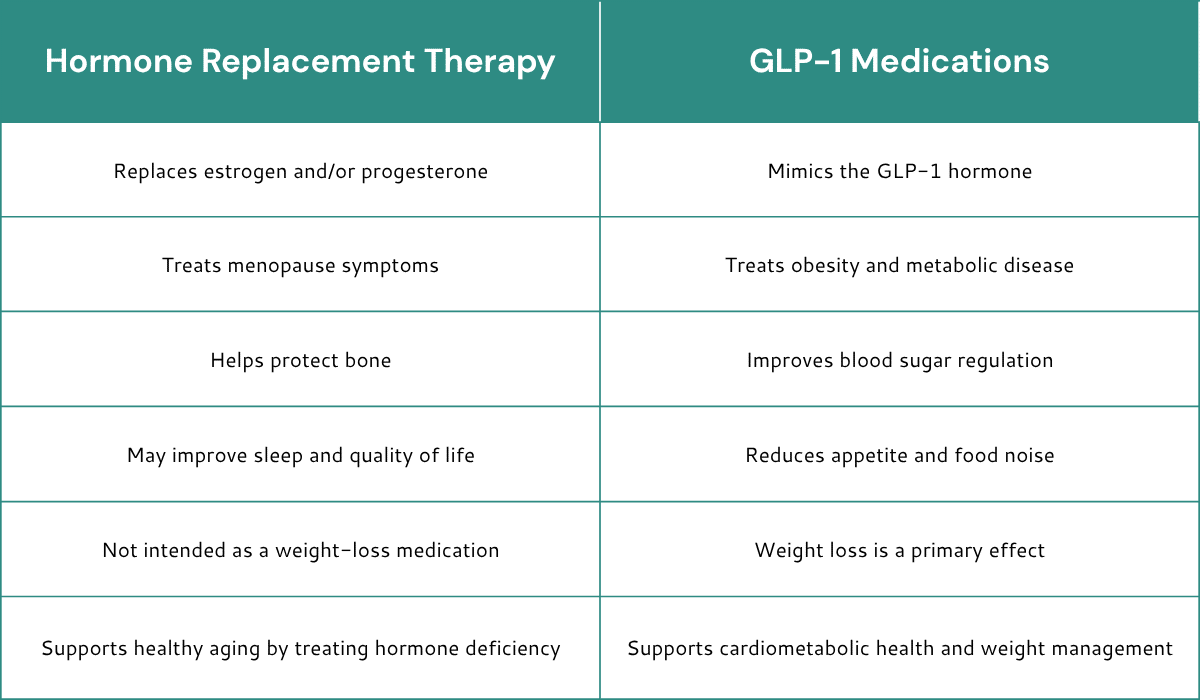
The important thing to remember is that these therapies aren’t competing.

For many women, they’re complementary.

Questions to Ask Your Healthcare Provider

If you’re currently taking hormone therapy or considering a GLP-1 medication, these are some of the questions worth discussing during your appointment.

  • Is my current hormone therapy still the best option for me?
  • Would transdermal estrogen be a better choice than oral estrogen?
  • How much protein should I be eating while losing weight?
  • How can we monitor my muscle mass, not just my body weight?
  • Should we repeat my cholesterol, blood sugar, or other lab work as I lose weight?
  • Will significant weight loss change my hormone requirements?
  • Should any of my oral medications be timed differently while I’m taking a GLP-1 medication?
  • What lifestyle habits will help me achieve the best long-term results?

My Take

As a pharmacist, I’m naturally interested in medications.

But after spending decades helping women navigate midlife, I’ve learned that medications are only one piece of the puzzle.

The women who experience the greatest long-term success aren’t simply taking a GLP-1 medication or using hormone therapy.

They’re preserving muscle through strength training. They’re eating enough protein. They’re sleeping better. They’re managing stress. They’re improving gut health. They’re paying attention to their cardiovascular health and bone health.

In other words, they’re looking at the whole picture.

That’s exactly how I approach women’s health in my work.

I don’t separate hormones from metabolism. I don’t separate gut health from inflammation. I don’t separate weight loss from healthy aging.

Everything is connected.

When we connect those dots instead of chasing individual symptoms, we create a plan that’s about far more than losing weight or eliminating hot flashes.

We create a plan that helps you feel healthier, stronger, and more confident for years to come.

Frequently Asked Questions

Can I take hormone replacement therapy and Ozempic together?

For most women, yes. Current evidence doesn’t show that menopausal hormone therapy reduces the effectiveness of GLP-1 medications or vice versa. Your treatment should always be individualized based on your medical history and symptoms.

Does hormone therapy help with weight loss?

Not directly. Hormone therapy improves menopause symptoms such as hot flashes, sleep disruption, and mood changes. Some women find it easier to lose weight because they feel better, sleep better, and have more energy, but HRT isn’t considered a weight-loss medication.

Can GLP-1 medications replace hormone therapy?

No. They address different health concerns. GLP-1 medications improve appetite regulation and metabolic health. Hormone therapy replaces estrogen and progesterone when appropriate to treat menopause symptoms and reduce certain long-term health risks.

Should I stop my hormones after I lose weight?

Not necessarily. Significant weight loss may change your hormone needs, but the decision to continue, adjust, or stop hormone therapy should be based on your symptoms, health goals, and medical history, not simply the number on the scale.

Will I lose muscle on a GLP-1 medication?

You can lose both fat and lean muscle during weight loss. That’s why adequate protein intake, regular resistance training, and monitoring body composition are so important.

Wondering If This Combination Is Right for You?

If you’ve been asking yourself questions like:

  • Should I stay on hormone therapy if I start a GLP-1?
    Is a GLP-1 medication even right for me?
  • Why am I doing everything “right” but still struggling with my weight?
  • How do hormones, metabolism, gut health, and muscle all fit together?

You don’t have to sort through conflicting information online or piece together advice from multiple providers.

During my Clarity Call, we’ll talk through your symptoms, health history, current medications, and goals. Together, we’ll determine the next best step, whether that’s additional testing, optimizing your hormone therapy, exploring physician-supervised GLP-1 medications or peptides, or building a roadmap that fits your unique situation.

My philosophy has always been simple:

Test rather than guess.

If you’re ready for personalized guidance instead of generic advice, I’d love to help.

👉 Schedule your Clarity Call: https://l.bttr.to/sppG1


References

American Diabetes Association. (2026). Standards of Care in Diabetes.

North American Menopause Society. (2022). The 2022 Hormone Therapy Position Statement of The North American Menopause Society. Menopause, 29(7), 767-794.

Jastreboff, A. M., et al. (2025). Tirzepatide once weekly for the treatment of obesity. New England Journal of Medicine.

Wilding, J. P. H., et al. (2021). Once-weekly semaglutide in adults with overweight or obesity. New England Journal of Medicine.

Eli Lilly and Company. (2025). Zepbound (tirzepatide) Prescribing Information.

Novo Nordisk. (2025). Wegovy (semaglutide) Prescribing Information.

Dr. Anna Garrett is a menopause expert and Doctor of Pharmacy. She helps women who are struggling with symptoms of perimenopause and menopause find natural hormone balancing solutions so they can rock their mojo through midlife and beyond. Dr. Anna is the author of Perimenopause: The Savvy Sister’s Guide to Hormone Harmony. Order your copy at www.perimenopausebook.com.

Dr. Anna is available for 1-1 consultations. Find out more at www.drannagarrett.com/lets-talk or click the button below.

SHARE!

Get Chapter 1 of Dr. Anna’s Book—Free!

Perimenopause: The Savvy Sister’s Guide to Hormone Harmony

This book gives you the tools you need to navigate this transition without losing your mind or your mojo.

By clicking “Submit” you are opting-in to receive email marketing from me. Don’t worry, you’re able to unsubscribe at any time if you don’t find value in the content I send, but I’m confident that you will.