Quick Answer:
GLP-1 medications may help some women with PMOS, formerly known as PCOS, especially when insulin resistance, higher weight, prediabetes, type 2 diabetes, androgen excess, or cardiometabolic risk are part of the picture. The evidence is strongest for improvements in weight, BMI, insulin resistance, waist circumference, and some androgen-related markers. But GLP-1s are not right for everyone, and they are not a replacement for a full-body PMOS plan.
PMOS Has Entered the GLP-1 Conversation
PMOS has officially entered the chat.
The condition most of us have known as PCOS, or polycystic ovary syndrome, was renamed polyendocrine metabolic ovarian syndrome, or PMOS, in May 2026. The name change matters because it points to what this condition really is: a whole-body endocrine and metabolic condition, not simply an ovary problem.
That distinction is not just semantics. It changes how we think about treatment.
For decades, women with PCOS were often handed birth control pills, told to lose weight, offered metformin, or sent home with the ever-helpful, “Come back when you want to get pregnant.” Bless it.
But PMOS affects much more than cycles and fertility. It can involve insulin resistance, higher androgen levels, acne, facial hair growth, irregular ovulation, weight gain, inflammation, cholesterol changes, blood sugar problems, fatty liver risk, and increased cardiovascular risk.
So it makes sense that GLP-1 medications are now part of the conversation.
What Are GLP-1 Medications?
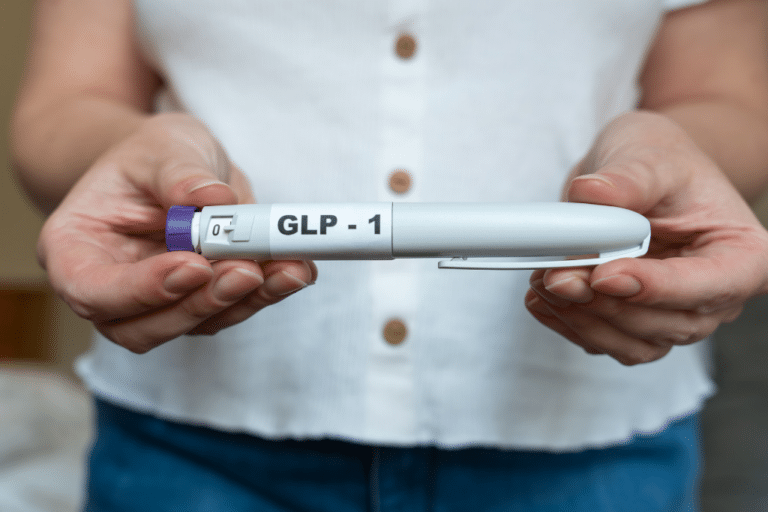
GLP-1 stands for glucagon-like peptide-1. It is a hormone your gut naturally releases after eating. It helps signal fullness, supports insulin release, slows stomach emptying, and helps regulate blood sugar.
GLP-1 receptor agonists mimic that hormone. You probably know them by brand names like Ozempic, Wegovy, Saxenda, and Victoza. Tirzepatide, sold as Mounjaro and Zepbound, works on both GLP-1 and GIP receptors, but it often gets included in the broader GLP-1 conversation.
These medications were first used for type 2 diabetes. Now, several are also used for chronic weight management in people who meet specific criteria.
The reason they are interesting for PMOS is simple: many women with PMOS have insulin resistance. And insulin resistance is not a small side plot. It can drive androgen production, worsen acne and unwanted hair growth, disrupt ovulation, increase cravings, and make weight loss feel like trying to parallel park a cruise ship.
This is why ‘just eat less and move more’ is lazy advice for many women with PMOS.
Why Would GLP-1s Help PMOS?
When insulin levels stay high, the ovaries can produce more androgens. Higher androgens can contribute to irregular cycles, acne, facial hair growth, scalp hair thinning, and ovulation problems.
GLP-1 medications may help by improving insulin sensitivity, lowering appetite, supporting weight loss, improving blood sugar control, and reducing some cardiometabolic risk markers.
The 2023 International Evidence-Based Guideline for PCOS, published before the PMOS name change, stated that anti-obesity medications, including GLP-1 receptor agonists such as liraglutide and semaglutide, could be considered in addition to lifestyle intervention for adults with PCOS and higher weight.
It does not mean every woman with PMOS should take one. It does mean GLP-1s are no longer some fringe idea being whispered about in online groups. They are part of the evidence-based treatment discussion for the right patient.
What Does the Research Say About GLP-1s and PMOS?
The evidence is promising, but it’s not a TikTok miracle.
A 2025 meta-analysis in Scientific Reports found that GLP-1 receptor agonists reduced body weight, BMI, and insulin resistance in women with PCOS, although nausea, vomiting, and dizziness were more common.
A 2024 meta-analysis found GLP-1 receptor agonists helped lower BMI, waist circumference, triglycerides, and total testosterone in women with PCOS living with obesity. Lower testosterone matters because androgen excess is one of the reasons women struggle with acne, hair growth on the face, and hair thinning on the scalp.
A 2026 systematic review in the European Journal of Endocrinology found GLP-1 receptor agonists were associated with modest short-term weight loss in women with PCOS and overweight or obesity. But the authors were also clear that evidence for metabolic, reproductive, and psychological outcomes is still uncertain because the available studies are limited.
Do GLP-1s appear helpful for some women with PMOS? Yes. Do they fix every piece of PMOS? No. Do we still need more long-term data? Absolutely.
Some studies suggest menstrual regularity and ovulation may improve, especially when weight loss and insulin sensitivity improve. That may be good news for women trying to restore ovulation. But it also means pregnancy can happen unexpectedly, so contraception and timing matter.
Who Might Benefit From GLP-1 Medications?
GLP-1 medications may be worth discussing with your provider if you have PMOS and one or more of these patterns:
- Insulin resistance, prediabetes, type 2 diabetes, or elevated fasting insulin.
- You are overweight or obese, especially if weight gain is worsening blood sugar, cholesterol, blood pressure, fatty liver risk, inflammation, or joint pain.
- Strong food noise, cravings, or appetite dysregulation that has not responded well to nutrition changes alone.
- Androgen-related symptoms like acne, facial hair growth, or scalp hair thinning, and insulin resistance appears to be part of the driver.
- You’ve tried nutrition changes, strength training, sleep support, stress work, or metformin, but your metabolic markers are still not improving.

Want to create a custom longevity health plan?
You’re in the right place.
I can help you with a functional approach to midlife women’s health including hormone balance, gut health, autoimmune issues, bone health, heart health and more!
Who Should Be More Careful With GLP-1s?
GLP-1s are not for everyone.
They may not be a good fit if you are pregnant, trying to conceive right now, or not using reliable contraception when pregnancy is possible. Current PCOS guidance recommends effective contraception with GLP-1 receptor agonists because pregnancy safety data are lacking.
These medications also require caution in people with a personal or family history of medullary thyroid cancer or MEN2, history of pancreatitis, significant gallbladder disease, severe gastroparesis, or active eating disorder concerns.
Lean PMOS deserves a special mention. Some women with PMOS are not overweight or obese, but they still have high androgens, irregular cycles, acne, or fertility issues. In those cases, weight loss may not be appropriate, and a GLP-1 may not be the best first move.
If the main drivers are stress physiology, under-eating, gut inflammation, thyroid dysfunction, nutrient deficiencies, sleep disruption, or adrenal dysregulation, appetite suppression is not the best first move and may do harm.
The Part Nobody Talks About Enough
GLP-1s can be helpful, but they are not a substitute for a full PMOS plan.
You still need enough protein. You still need strength training. You still need fiber. You still need to protect muscle. You still need sleep. You still need optimal gut health. You still need to follow your labs.
‘Take the shot and eat less,’ that is not a healthspan plan. For women with PMOS, I want to know the full picture of what is happening with fasting insulin, A1C, glucose, lipids, liver enzymes, inflammatory markers, androgens, thyroid function, cortisol patterns, gut health, and nutrient status.
Frequently Asked Questions About GLP-1s and PMOS
Can GLP-1 medications help PMOS?
GLP-1 medications may help some women with PMOS, especially when insulin resistance, higher weight, prediabetes, type 2 diabetes, or cardiometabolic risk are present. The best-supported benefits are weight reduction, BMI reduction, improved insulin resistance, and some improvements in androgen-related markers.
Are GLP-1s approved specifically for PMOS?
GLP-1 medications are not approved specifically for PMOS. Some are approved for type 2 diabetes or chronic weight management. In PMOS, they may be used when the clinical picture fits, especially when higher weight or metabolic risk is part of the case.
Can GLP-1s improve fertility in PMOS?
Some studies suggest GLP-1 receptor agonists may improve menstrual regularity and natural pregnancy rates in women with PCOS, likely because of improvements in weight and insulin resistance. They are not fertility drugs, and they should not be used during pregnancy unless a qualified clinician specifically advises otherwise.
Should lean women with PMOS use GLP-1s?
Not usually as a first-line option. Lean PMOS can still involve androgens, irregular cycles, thyroid issues, stress physiology, inflammation, or nutrient problems. If weight loss is not appropriate, appetite-suppressing medication may create more problems than it solves.
What labs should women with PMOS ask about before considering GLP-1s?
Useful labs may include fasting insulin, fasting glucose, A1C, lipid panel, liver enzymes, thyroid markers, inflammatory markers, and androgen markers such as total testosterone, free testosterone, DHEA-S, and SHBG. The right panel depends on the individual.
The Bottom Line
If you have PMOS and feel like your metabolism has gone rogue, this is exactly where a personalized plan matters. Book a Clarity Call and let’s talk through what may be driving your symptoms, what labs would be useful, and what next step makes the most sense for you.
References
De Hollanda Morais, B. A. A., Prizão, V. M., de Souza, M. M., Mendes, B. X., Defante, M. L. R., Martins, O. C., & Rodrigues, A. M. (2024). The efficacy and safety of GLP-1 agonists in PCOS women living with obesity in promoting weight loss and hormonal regulation: A meta-analysis of randomized controlled trials. Journal of Diabetes and Its Complications, 38(10), 108834. https://doi.org/10.1016/j.jdiacomp.2024.108834
Endocrine Society. (2026, May 12). Polyendocrine Metabolic Ovarian Syndrome: New name to improve diagnosis and care of condition affecting 170 million women worldwide. https://www.endocrine.org/news-and-advocacy/news-room/2026/pcos-name-change
Forslund, M., Wändell, P., Forsberg, L., Österberg, M., & Dagerhamn, J. (2026). GLP-1 receptor agonist treatment in women with polycystic ovary syndrome: A systematic review and meta-analysis. European Journal of Endocrinology, 194(3), 25-39. https://doi.org/10.1093/ejendo/lvaf031
Lin, S., Deng, Y., Huang, J., et al. (2025). Efficacy and safety of GLP-1 receptor agonists on weight management and metabolic parameters in PCOS women: A meta-analysis of randomized controlled trials. Scientific Reports, 15, 16512. https://doi.org/10.1038/s41598-025-99622-4
Monney, M., et al. (2025). Endocrine and metabolic effects of GLP-1 receptor agonists on women with PCOS, a narrative review. Endocrine Connections, 14(5), e240529. https://doi.org/10.1530/EC-24-0529
Teede, H. J., Tay, C. T., Laven, J. J. E., Dokras, A., Moran, L. J., Piltonen, T. T., Costello, M. F., Boivin, J., Redman, L. M., Boyle, J. A., Norman, R. J., Mousa, A., & Joham, A. E. (2023). Recommendations from the 2023 International Evidence-Based Guideline for the Assessment and Management of Polycystic Ovary Syndrome. Journal of Clinical Endocrinology & Metabolism, 108(10), 2447-2469. https://doi.org/10.1210/clinem/dgad463
Teede, H. J., et al. (2026). Polyendocrine metabolic ovarian syndrome, the new name for polycystic ovary syndrome. The Lancet. https://www.thelancet.com/journals/lancet/article/PIIS0140-6736(26)00717-8/fulltext
Zhou, L., Ni, Z., Yu, J., Cheng, W., & Cai, Z. (2023). Effects of GLP-1 receptor agonists on pregnancy rate and menstrual cyclicity in women with polycystic ovary syndrome: A systematic review and meta-analysis. BMC Endocrine Disorders, 23, 256. https://doi.org/10.1186/s12902-023-01500-5
Dr. Anna Garrett is a menopause expert and Doctor of Pharmacy. She helps women who are struggling with symptoms of perimenopause and menopause find natural hormone balancing solutions so they can rock their mojo through midlife and beyond. Dr. Anna is the author of Perimenopause: The Savvy Sister’s Guide to Hormone Harmony. Order your copy at www.perimenopausebook.com.
Dr. Anna is available for 1-1 consultations. Find out more at www.drannagarrett.com/lets-