
Janet is miserable. She’s not sleeping. Her joints hurt. She is sweating through her sheets at night. Her patience is gone. Sex is uncomfortable. She feels like she is losing her mind. So she drags her 48-year-old self to the doctor to talk about hormone therapy because her best friend has had such miraculous changes.
The doctor shrugs and says, “I don’t believe in HRT.”
Or worse, “Hormones cause cancer.”
She leaves scared, dismissed, and still miserable.
Then she asks her pharmacist one simple question and finally gets an actual explanation of the options and a referral to someone in town who is well-known for being up to date on menopause.
That is exactly why this conversation matters.
Pharmacists do far more in menopause care than many people realize, and dismissing them as “pill counters” misses the point completely.
Yes, some pharmacists dispense medications. That part matters. Accuracy matters. Safety matters. Counseling matters. But reducing pharmacists to people who put pills in bottles is outdated, lazy, and wrong. Pharmacists are trained medication experts. They are educated to understand how drugs work, how they interact, how to dose them correctly, how disease states affect medication choice, and how to catch mistakes before those mistakes reach the patient. And in many states, they can PRESCRIBE in collaboration with a physician.
In menopause care, pharmacists are often some of the best-positioned clinicians to answer medication questions clearly, safely, and in real time.
And let’s clear something up: talking to patients about menopause drug therapy is not out of a pharmacist’s lane.
It IS our lane.
Menopause care is not just about making a diagnosis. It is about helping real women make sense of real treatment options, real risks, real side effects, and real-life medication decisions. That includes hormone therapy, vaginal estrogen, nonhormonal prescription options, antidepressants, sleep medications, thyroid medications, supplements, and over-the-counter products. Every one of those choices comes with questions.
Is this the right medication?
Is this the right dose?
Is this the right route for this unique patient?
Are there any drug interactions?
What side effects are normal?
What should make someone call their clinician?
Those are medication questions, and medication questions are pharmacist questions.
Pharmacists help women understand the difference between oral, transdermal, and vaginal hormone therapy. They explain when progesterone is needed and why. They talk through side effects, dosing, contraindications, interactions, and what to watch for. They help women sort through whether the treatment they were given makes sense, how to use it correctly, and whether another medication or supplement may be complicating the picture. You’re not getting THAT in the typical 7-minute office visit.
That is not scope creep. That is medication expertise.
Menopause care is still wildly inconsistent. Many physicians receive very little formal menopause education during training. That is not an insult. It is a systems problem. A 2023 survey of U.S. OB-GYN residency program directors found that only 31.3% reported having a menopause curriculum in their training program. At the same time, 92.9% strongly agreed that residents nationwide should have access to a standardized menopause curriculum, and nearly 90% said they would be likely to use self-paced menopause modules if available. That is not a tiny gap. That is a giant flashing sign that formal menopause education is still lacking.
When a clinician has limited (or no) training in menopause but speaks with total certainty, women pay the price.
That is one reason so many women are still being told nonsense like:
“I don’t believe in HRT.”
“Hormones cause cancer.”
“You’re just getting older.”
“Take this antidepressant and see what happens.”
If all physicians were consistently well-informed in menopause care, we would not have millions of women being denied hormone therapy because a clinician does not believe in it. We would not have women being scared away from treatment because someone repeated outdated, fear-based messaging with no nuance and no individualized risk discussion. We would not have women spending months or years piecing together answers from friends, podcasts, social media, and desperate Google searches because no one gave them a straight answer in the exam room.
Some pharmacists are absolutely ill-informed too. Let’s not pretend otherwise. That happens in every discipline. There are pharmacists, physicians, nurse practitioners, physician assistants, and influencers of all kinds sharing information that is incomplete, outdated, or just plain wrong.
But that is exactly the point.
Bad information is not owned by one profession.
Neither is good information.
The answer is not to act like physicians are the only medical professionals who should ever be listened to. The answer is to listen to the clinicians who actually know what they are talking about, stay current, understand the evidence, and know their scope.
And in the world of menopause drug therapy, pharmacists have a lot to contribute.
Let’s also address another ugly perception: that pharmacists are somehow standing in the way of women getting their hormones, or that they are personally responsible for drug shortages and access problems.
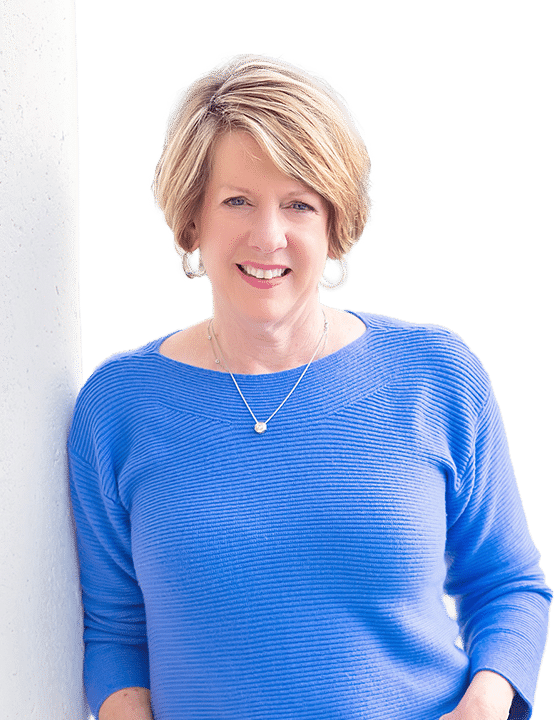
Want to create a custom longevity health plan?
You’re in the right place.
I can help you with a functional approach to midlife women’s health including hormone balance, gut health, autoimmune issues, bone health, heart health and more!
That narrative is BS.
Pharmacists do not create national drug shortages. They do not control manufacturing problems. They do not set insurance formularies. They do not decide what your employer’s plan will cover. They do not invent prior authorization requirements. They do not write the laws and regulations that shape access.
What they often do is stand in the middle of that mess, trying to help patients navigate it only to be the whipping boy for a women or their doctors.
They are the ones explaining why a product is backordered. They are the ones calling prescribers for alternatives. They are the ones trying to locate stock, clarify directions, fix insurance rejects, and make sure the substitute product is actually appropriate. So blaming pharmacists for the broken parts of the system they are trying to manage is not just inaccurate. It is lazy.
And while we are at it, pharmacists have saved many a doctor’s ass from making a major patient care mistake.
Wrong dose.
Duplicate therapy.
Bad interaction.
Missed contraindication.
Confusing directions.
Dangerous supplement overlap.
A medication that was prescribed without clear understanding of how it should actually be used.
These things happen every day. Pharmacists catch them every day.
That is not physician-bashing. That is reality.
Every discipline in healthcare has blind spots. Good care happens when people know what they know, know what they do not know, and respect the expertise of the people beside them.
Which brings me to the social media nonsense.
It is deeply unhelpful when one discipline bashes another online for clicks, attention, or ego. That is what prompted this post in the first place. A well-known MD influencer decided that a pharmacist was outside her scope of practice for talking to a patient about estriol and estradiol and posted a reel about it.
Menopause care is hard enough without clinician drama.
There is certainly more than enough misery to go around.
Women are dealing with hot flashes, insomnia, anxiety, low libido, vaginal dryness, recurrent UTIs, brain fog, weight changes, joint pain, palpitations, mood swings, and a healthcare system that still too often minimizes all of it. They do not need turf wars piled on top.
They need good care.
They need accurate information.
They need adults in the room.
They need clinicians who collaborate instead of posture.
That is why menopause care works best when it is team-based.
The physician brings diagnosis, broader medical management, and clinical oversight.
The pharmacist brings medication expertise, safety review, formulation knowledge, counseling, interaction screening, troubleshooting, and follow-through.
The patient brings her symptoms, goals, values, preferences, and lived experience.
That is how this should work.
Not with one profession trying to silence another.
Not with influencer MDs acting like physicians are the only voices that count.
Not with pharmacists being told that drug therapy counseling is somehow out of bounds.
Drug therapy is not the shoulder of the road for pharmacists.
It is the middle of the damn highway.
For pharmacists who want to sharpen their skills in this area, there are good options. One is CEimpact’s course, Hormone Harmony: The Pharmacist’s Role in Managing Perimenopause and Menopause, taught by me. It is a practical way for pharmacists to deepen their knowledge of hormonal changes, evidence-based management strategies, and pharmacologic and self-care options for perimenopause and menopause.
Here’s the bottom line about the role of pharmacists in menopause care:
Pharmacists are not extras.
We are not background noise.
We are not pill counters.
We are not obstacles standing between women and the care they need.
We are medication experts, educators, safety nets, advocates and problem-solvers.
And in a space where too many women are still dismissed, denied, and misinformed, that matters a lot.
Healthcare works better when every expert at the table is respected. Let’s start there.
References
Allen, J. T., Johnson, M. S., Magness, C. R., Kindinger, L. M., Goodwin, S., & Zeszotek-Morrison, C. A. (2023). Needs assessment of menopause education in United States obstetrics and gynecology residency training programs. Menopause, 30(12), 1336-1340.
CEimpact. (n.d.). Hormone Harmony: The Pharmacist’s Role in Managing Perimenopause and Menopause.
The Menopause Society. (n.d.). Certification examination.
U.S. Bureau of Labor Statistics. (2025). Pharmacists: Occupational outlook handbook.
U.S. Food and Drug Administration. (2026, February 12). FDA approves labeling changes to menopausal hormone therapy products.
Dr. Anna Garrett is a menopause expert and Doctor of Pharmacy. She helps women who are struggling with symptoms of perimenopause and menopause find natural hormone balancing solutions so they can rock their mojo through midlife and beyond. Dr. Anna is the author of Perimenopause: The Savvy Sister’s Guide to Hormone Harmony. Order your copy at www.perimenopausebook.com.
Dr. Anna is available for 1-1 consultations. Find out more at www.drannagarrett.com/lets-