Fiber is suddenly everywhere. Wraps, powders, cereals, “fiber brownies,” and influencers acting like they personally discovered beans.
And I’m not mad about it.
Because heart disease is the number one killer of post-menopausal women. And fiber is one of the most underrated tools we have to protect the heart, without a prescription, without a biohacking budget, and without living on sad salads.
First, what is fiber?
Fiber is the part of plant foods your body cannot fully break down. Instead of being absorbed like sugar or fat, it travels through your digestive tract doing important work along the way.
There are two main types:
Soluble fiber
This dissolves in water and turns into a gel-like substance. It helps lower LDL cholesterol and supports healthy blood sugar.
Insoluble fiber
This does not dissolve in water. It adds bulk to stool and helps keep things moving.
Most plant foods contain both, but some lean more one way than the other.
Why midlife women should care about fiber more than ever
After menopause, estrogen drops. And that matters for your heart.
Estrogen has protective effects on blood vessels and cholesterol patterns. When it declines, many women see LDL cholesterol rise, blood pressure creep up, belly fat shift, blood sugar get less forgiving, and inflammation climbs.
Fiber is not a magic wand. But it hits several of the biggest drivers of heart disease at the same time, especially in midlife.
How fiber supports heart health (the real reasons)
Let’s talk about what fiber actually does, without the fluff.
Fiber helps lower LDL cholesterol
Soluble fiber binds to bile acids in your gut. Your body uses cholesterol to make bile acids, so when more bile is carried out of the body, your liver pulls more cholesterol from the blood to replace it. Result: LDL can come down over time.
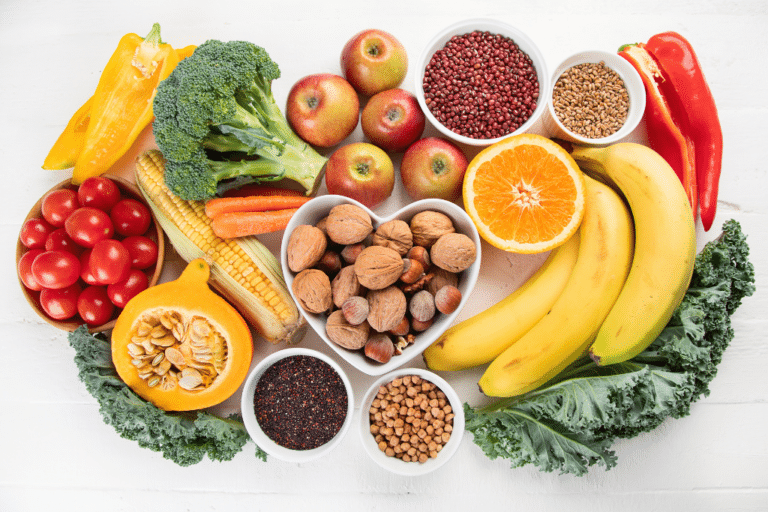
This is why foods like oats, barley, beans, lentils, apples, citrus, chia, and psyllium get so much attention.
Fiber helps stabilize blood sugar
When meals have enough fiber, digestion slows down. Glucose rises more gently. Insulin demands are lower. That matters because insulin resistance is tightly connected to heart disease risk, and it becomes more common in perimenopause and post-menopause.
If you feel like your body suddenly cannot handle carbs the way it used to, fiber is part of the fix.
Fiber supports a healthier gut microbiome
Your gut bacteria ferment certain fibers and create short-chain fatty acids. These compounds may help support healthy inflammation levels and metabolic function. Translation: fiber feeds the good guys.
Fiber helps with blood pressure and weight regulation
High fiber diets are linked with healthier blood pressure. Fiber also increases fullness, which can help with appetite regulation without white-knuckling your way through the day.
And no, I am not telling you to eat fiber just to lose weight. I am saying midlife hunger can feel feral, and fiber can make meals actually satisfying.
How much fiber do you need?
Most women should aim for around 30-35 grams per day from food.
Most women are nowhere near that.
A very common intake is around half of the target. Which means a lot of women are walking around thinking they eat “pretty healthy” while their fiber intake is living in the basement.
The good news is you do not need to overhaul your life. You need a few strategic swaps.
The biggest fiber mistake I see
Going from “almost none” to “all the beans” overnight.
Then you bloat, cramp, and look six months pregnant by 3 pm. You decide fiber is the problem. You quit. The end.
Let’s not do that.
Fiber needs a ramp-up. Your gut microbes need time to adjust. Your hydration needs to keep up. And yes, you might need to chew your food like an adult.

Want to create a custom longevity health plan?
You’re in the right place.
I can help you with a functional approach to midlife women’s health including hormone balance, gut health, autoimmune issues, bone health, heart health and more!
High-fiber foods that actually help (and taste good)
Here are easy wins, grouped by category.
Breakfast
- Oatmeal topped with chia or ground flax
- Berries added to yogurt or cottage cheese (raspberries shine here!)
- Whole-grain toast with avocado and hemp seeds
Lunch
- Lentil soup or chili
- Big salad plus beans or chickpeas
- Leftover roasted veggies tossed into a grain bowl
Dinner
- Beans or lentils added to taco meat, pasta sauce, or casseroles
- Roasted Brussels sprouts, broccoli, or carrots
- Barley, quinoa, farro, or brown rice as the base instead of white rice
Snacks
- An apple or a pear with nut butter
- Popcorn (yes, it counts)
- Hummus with veggies
- Edamame
Fiber boosters (small but mighty)
- Chia seeds
- Ground flax
- Psyllium husk (if tolerated)
- Hemp hearts
- Avocado
A simple “fiber math” trick
Aim for:
- 8 to 10 grams at breakfast
- 8 to 10 grams at lunch
- 8 to 10 grams at dinner
- 2 to 5 grams from snacks
That gets you into the 25 to 30 gram range without turning meals into a punishment.
What about fiber supplements?
Food first. Always.
But supplements can help in specific cases, especially for LDL reduction. Psyllium has the strongest evidence among fiber supplements for cholesterol support.
If you use a supplement:
- Start low
- Increase slowly
- Take with plenty of water
- Separate from medications by at least 2 hours unless your clinician says otherwise
And please do not use fiber powder as an excuse to avoid fruits, vegetables, beans, and whole grains. Your body wants the full package, not a beige drink.
Red flags and “use common sense” notes
Talk to your clinician before aggressively increasing fiber if you have:
- A history of bowel obstruction
- Severe IBS symptoms that flare easily
- Active inflammatory bowel disease flares
- Unexplained weight loss, blood in stool, or new severe constipation
Fiber is fantastic, but we are not doing reckless wellness.
A sassy but loving bottom line
Fiber is trending because it works. Not because it is cute.
If you are a midlife woman and you care about your heart, your cholesterol, your blood sugar, your gut, your energy, and your long-term health, fiber is not optional. It is foundational.
Start where you are. Add a little. Drink water. Repeat.
Your future self wants you to take this seriously. And she would also like you to poop normally while you do it.
If you want help connecting the dots between your labs, your symptoms, and your real-life routine, book a 45-minute call with me. We will figure out what matters most for your heart and health in this season, and what to do next.
References
American Heart Association. (2022, January 27). Sound the fiber alarm! Most of us need more of it in our diet.
American Heart Association. (2025, September 11). Understanding food nutrition labels.
Carr, T. P., Gallaher, D. D., Yang, C. H., & Hassel, C. A. (2003). Viscous fiber effects on bile acid excretion and cholesterol metabolism. Journal of Nutritional Biochemistry, 14(9), 539–546.
Centers for Disease Control and Prevention. (2024, May 15). About women and heart disease.
Ghavami, A., et al. (2023). Soluble fiber supplementation and serum lipid profile: A systematic review and meta-analysis. Nutrients, 15(10), Article 2294.
Threapleton, D. E., Greenwood, D. C., Evans, C. E. L., Cleghorn, C. L., Nykjaer, C., Woodhead, C., Cade, J. E., Gale, C. P., & Burley, V. J. (2013). Dietary fibre intake and risk of cardiovascular disease: Systematic review and meta-analysis. BMJ, 347, f6879.
Wu, Y., Qian, Y., Pan, Y., Li, P., Yang, J., Ye, X., & Xu, G. (2015). Association between dietary fiber intake and risk of coronary heart disease: A meta-analysis. Nutrition, Metabolism and Cardiovascular Diseases, 25(6), 437–445.
Yao, F., et al. (2023). Dietary intake of total and specific fiber sources and cardiovascular outcomes: Systematic review and meta-analysis. Frontiers in Nutrition, 10, 1153165.
Dr. Anna Garrett is a menopause expert and Doctor of Pharmacy. She helps women who are struggling with symptoms of perimenopause and menopause find natural hormone balancing solutions so they can rock their mojo through midlife and beyond. Dr. Anna is the author of Perimenopause: The Savvy Sister’s Guide to Hormone Harmony. Order your copy at www.perimenopausebook.com.
Dr. Anna is available for 1-1 consultations. Find out more at www.drannagarrett.com/lets-